 share
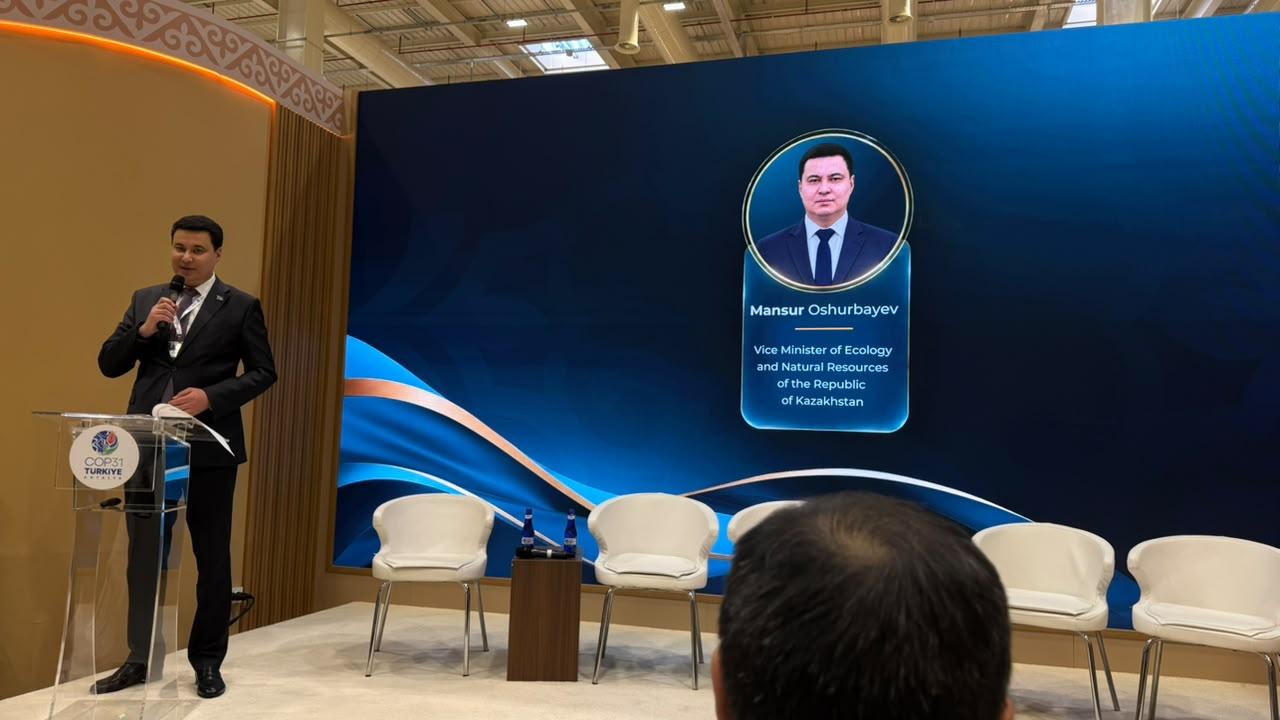
On November 9, a session dedicated to the restoration of peatlands and wetlands was held at Kazakhstan’s National Pavilion during the COP31 climate conference in Antalya, Türkiye.
The event was organized by the Food and Agriculture Organization of the United Nations (FAO) and the Forestry and Wildlife Committee of the Ministry of Ecology and Natural Resources of the Republic of Kazakhstan. The session brought together representatives of government agencies, international organizations, the scientific community, and financial partners.
Opening the session, Mansur Oshurbayev, Vice Minister of Ecology and Natural Resources of the Republic of Kazakhstan, emphasized that restoring natural ecosystems is an important component of addressing climate change, preserving water resources, and protecting biodiversity.
Peatlands store carbon, regulate water systems, and provide habitats for numerous species. Their degradation, however, can lead to increased greenhouse gas emissions, higher wildfire risks, and the loss of valuable natural areas.
Wetlands are particularly important for Kazakhstan. They contribute to the conservation of water resources and serve as natural buffers against drought and desertification.
These ecosystems also play a vital role along migratory bird routes. As a party to the Ramsar Convention, Kazakhstan continues its efforts to conserve wetlands of international importance.
The Vice Minister stressed that ecosystem restoration requires scientifically sound solutions, effective management, and adequate financing. Carbon financing could serve as an additional source of support for environmental conservation projects.
At the same time, the climate benefits associated with carbon credits must be verified through reliable data. Transparent monitoring, reporting, and verification (MRV), biodiversity protection, and consideration of local community interests are essential conditions for such projects.
Mansur Oshurbayev noted that carbon financing should complement public investment and international support.
The Vice Minister also highlighted the importance of strengthening regional cooperation, noting that Central Asian countries share interconnected water resources, ecosystems, and wildlife migration routes.
He expressed hope that the discussion would help develop concrete recommendations and strengthen cooperation among government institutions, scientists, international organizations, and financial partners.
 EcoQolday
 Check payment
 Login to the system
