 share
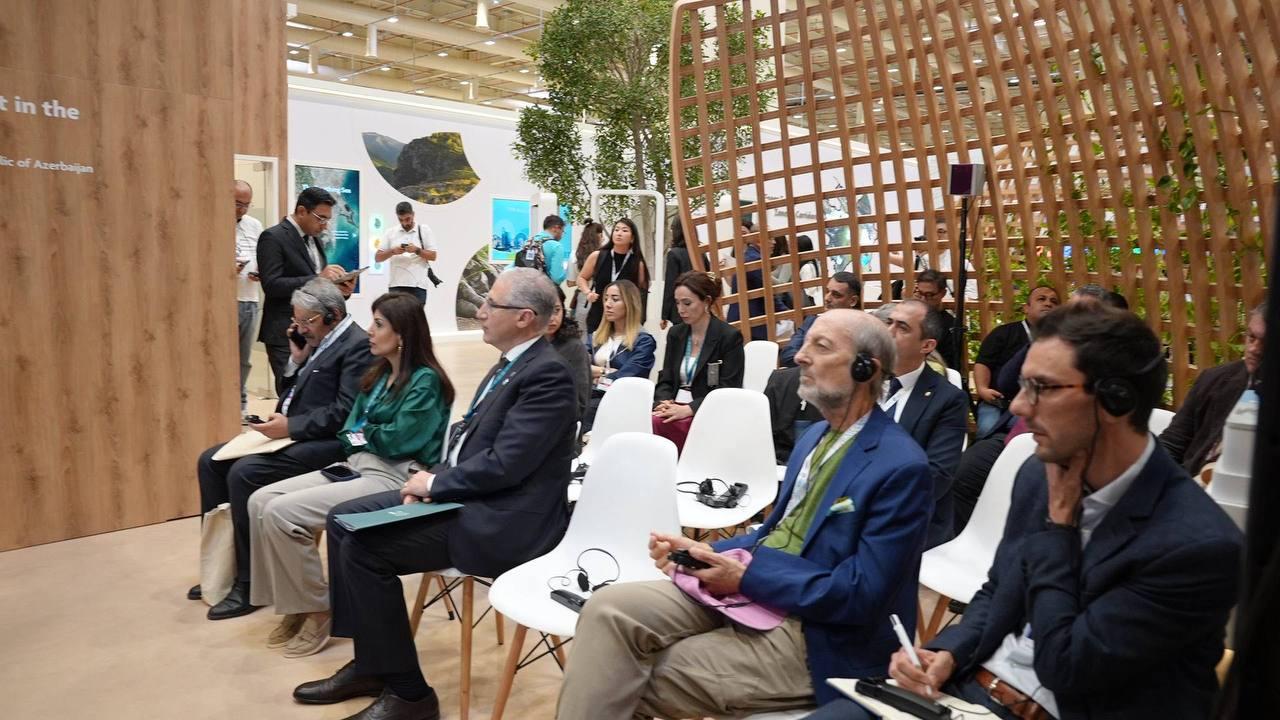
During the COP31 climate conference in Antalya, Türkiye, Kazakhstan called for stronger scientific cooperation among the five Caspian littoral states, the development of joint environmental monitoring, and the exchange of data to preserve the Caspian Sea ecosystem. These issues were discussed during the international panel discussion titled “The Caspian Sea: Science and Regional Cooperation for Environmental Protection,” held at the Azerbaijan Pavilion.
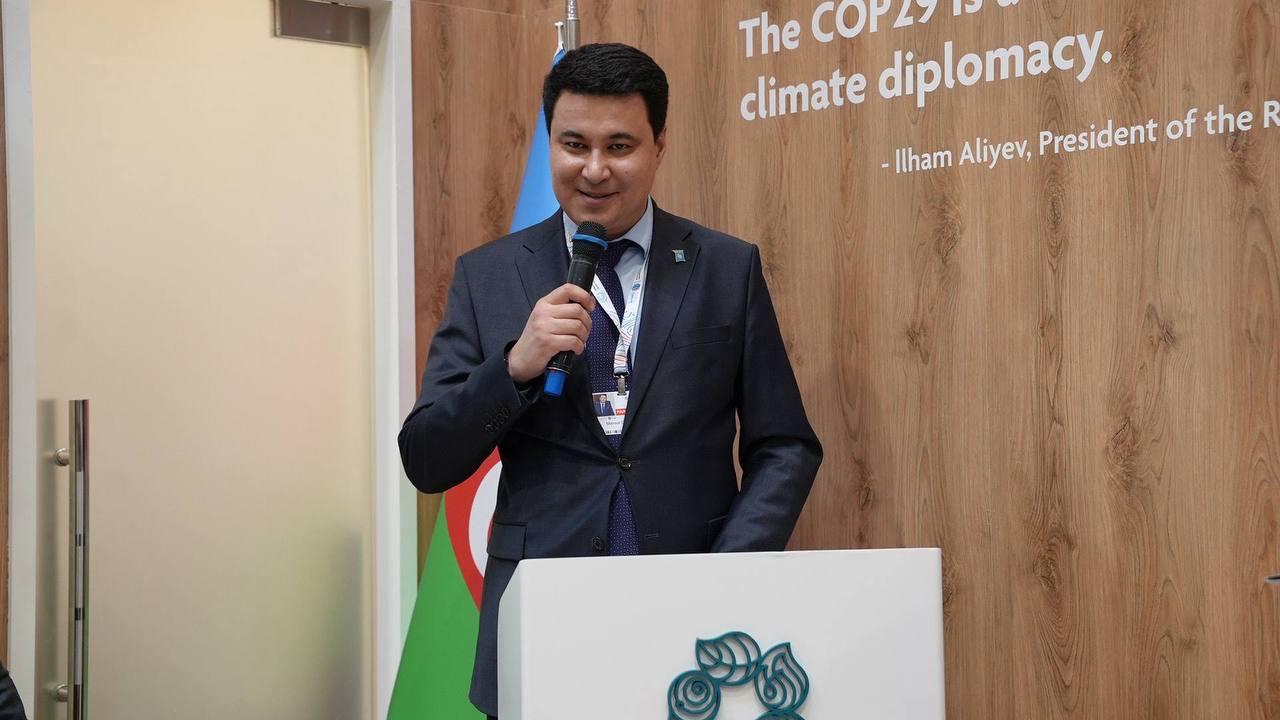
The opening of the event was attended by Mukhtar Babayev, Representative of the President of the Republic of Azerbaijan on Climate Issues, and Mansur Oshurbayev, Vice Minister of Ecology and Natural Resources of the Republic of Kazakhstan. In his remarks, the Kazakh representative highlighted the serious environmental challenges facing the Caspian region and emphasized the need for coordinated action among the Caspian littoral states.
One of the most pressing challenges remains the declining water level of the Caspian Sea. According to an analysis of shoreline changes, the area of Kazakhstan’s part of the Caspian Sea has decreased by more than 16,000 square kilometers over the past 25 years.
As M. Oshurbayev noted, the scale of these changes requires joint solutions based on reliable scientific data and comprehensive research. Particular importance is attached to developing joint monitoring systems, exchanging scientific information, and strengthening cooperation among research institutions of the five Caspian littoral states.
An important contribution by Kazakhstan to these efforts has been the establishment of the Kazakh Research Institute of the Caspian Sea at the initiative of President Kassym-Jomart Tokayev. The institute focuses on comprehensive studies of the marine environment and providing scientific support for measures aimed at preserving the Caspian ecosystem. Kazakhstan is interested in strengthening the institute’s capacity and promoting its active cooperation with relevant scientific institutions across the region.
Special attention during the discussion was also given to regional cooperation under the Tehran Convention, which has served as the foundation for environmental cooperation among the five Caspian littoral states for two decades. Participants examined the role of scientific research in preventing marine pollution, conserving biodiversity, restoring ecosystems, and developing effective environmental protection measures.
As the Vice Minister emphasized, the findings of scientific research and expert assessments should serve as the basis for identifying priority environmental projects, preparing them for implementation, and attracting international support.
Kazakhstan expressed its commitment to further strengthening scientific cooperation and developing coordinated approaches to preserving the Caspian Sea. The advancement of joint research, environmental monitoring, and practical conservation initiatives is expected to help unite the efforts of the Caspian littoral states in protecting the region’s unique ecosystem.

 EcoQolday
 Check payment
 Login to the system
