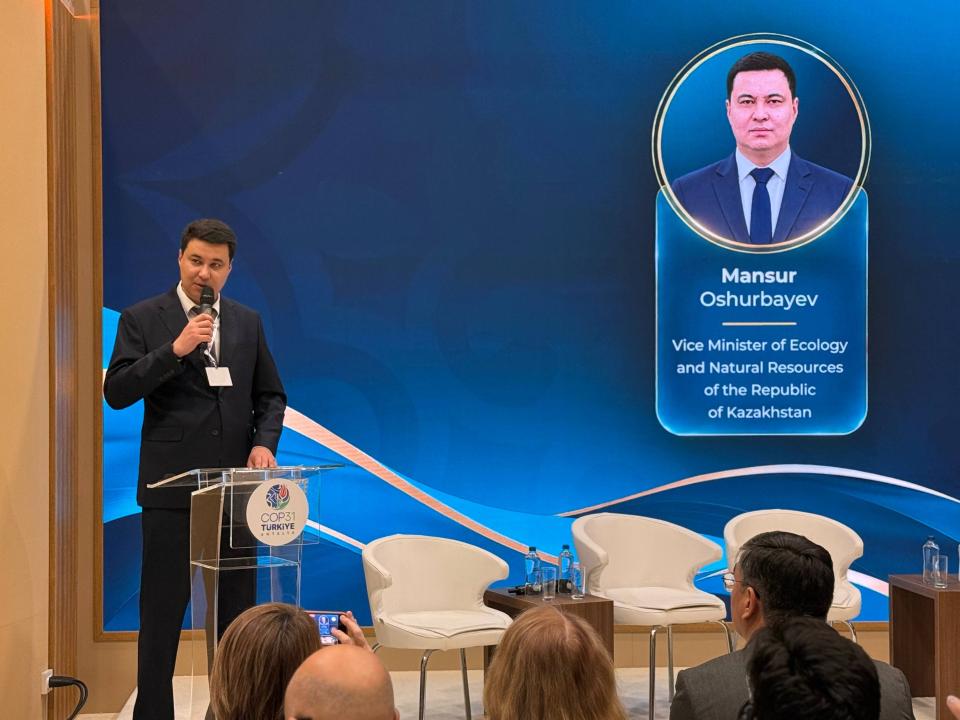
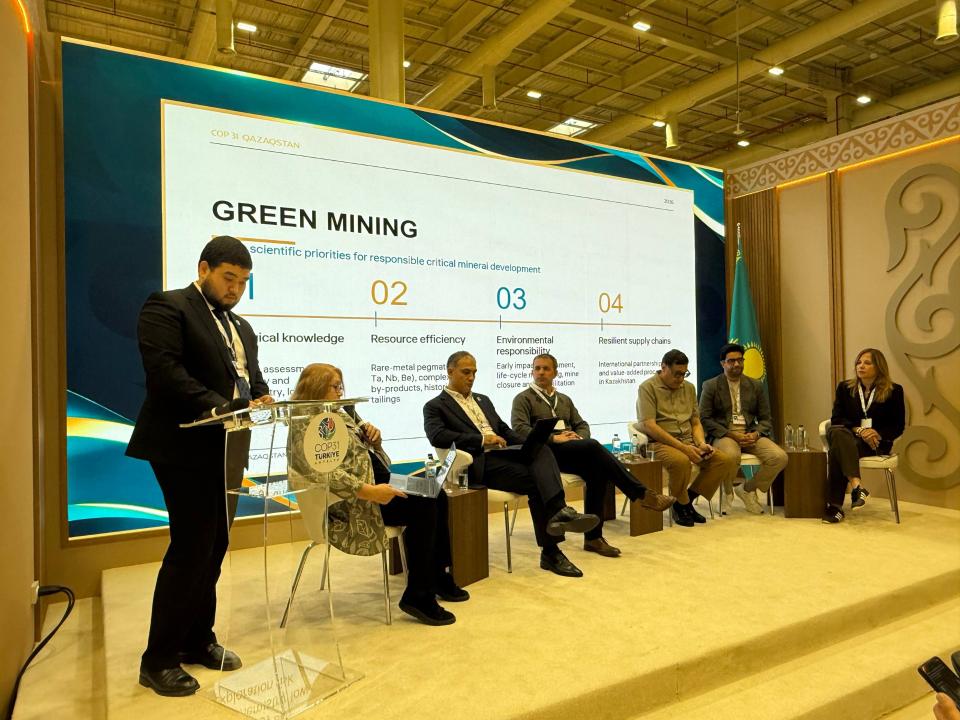
Vice Minister of Ecology and Natural Resources of the Republic of Kazakhstan Mansur Oshurbayev participated in the session titled “Powering the Transition: Energy Security, Mobility & Critical Minerals,” held at the National Pavilion of Kazakhstan on the sidelines of COP31.
The session focused on energy security, sustainable mobility and critical minerals.
The discussion was organized by the Islamic World Educational, Scientific and Cultural Organization (ICESCO), Responding to Climate Change (RTCC), and D. Serikbayev East Kazakhstan Technical University.
As M. Oshurbayev noted:
“The energy transition is fundamentally changing the concept of energy security. In the past, it was primarily about ensuring stable supplies of oil and gas. Today, energy security also depends on reliable power grids, clean energy generation, transport electrification and resilient supply chains for critical minerals, including lithium, copper, nickel and rare earth elements, which are essential for modern technologies.
At the same time, the energy transition must not only contribute to reducing emissions but also strengthen economic resilience, ensure energy affordability and create new opportunities for industrial development.
Kazakhstan, with its significant reserves of energy resources and critical minerals, aims to move beyond raw material exports towards advanced processing and the production of high-value-added products. President Kassym-Jomart Tokayev has set the task of launching at least three enterprises producing high-tech products in the field of rare earth metals and critical materials within the next three years.
The Ministry of Ecology and Natural Resources emphasizes that the expansion of extraction and processing activities must go hand in hand with environmental responsibility. This includes the introduction of best available techniques, improved resource efficiency, and the development of recycling and material reuse. These measures are essential to building truly sustainable supply chains.”
During the session, participants discussed carbon financing mechanisms that could attract additional investment in clean energy, sustainable transport and low-carbon technologies, particularly in developing economies. The discussion also addressed regulatory frameworks, infrastructure development and logistics.
The session aligns with the priorities of the COP31 Action Agenda, particularly those related to the clean energy transition and green industrialization.


 EcoQolday
 Check payment
 Login to the system

 share