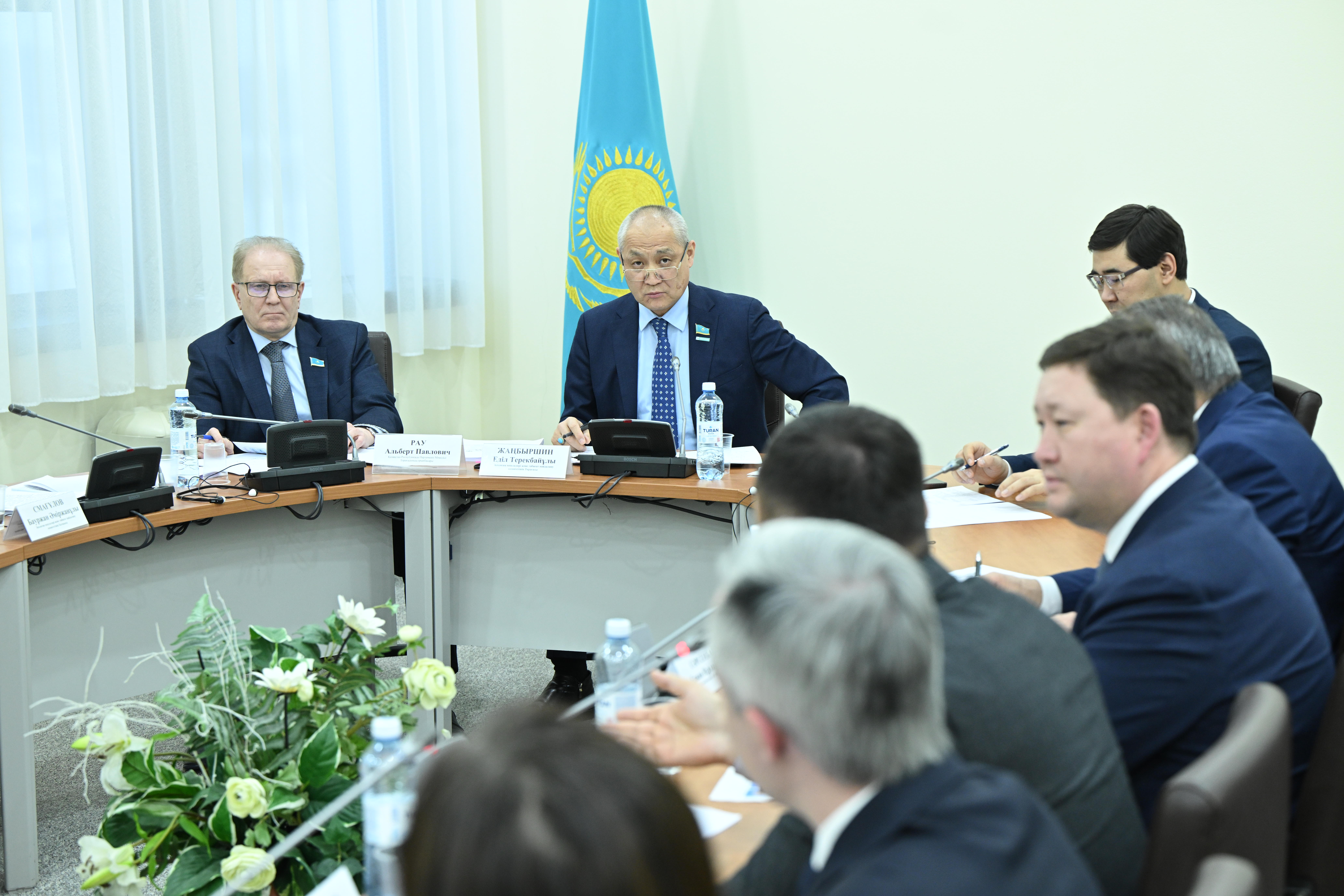
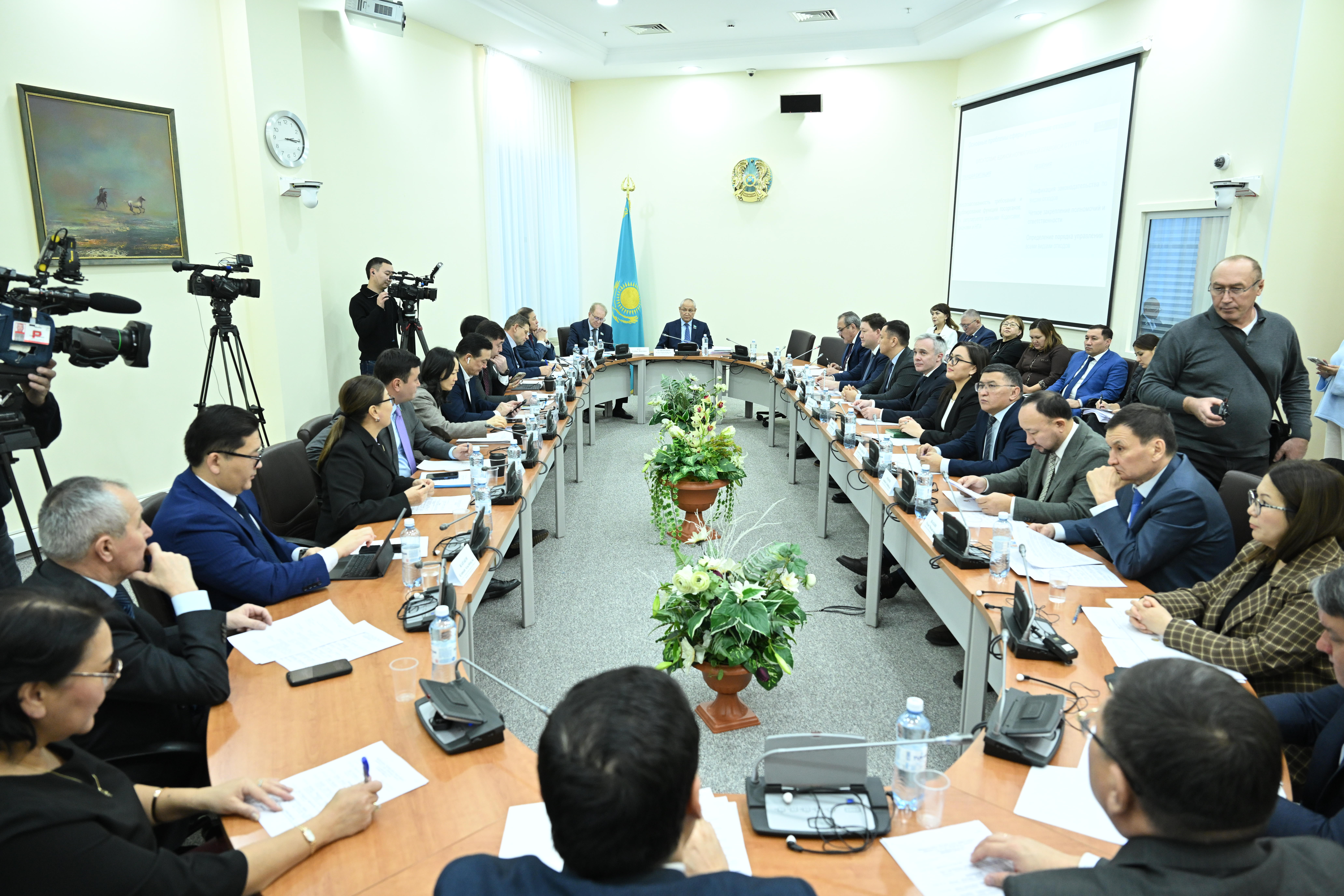
The Committee on Ecology and Nature Management of the Mazhilis of the Parliament of the Republic of Kazakhstan held a roundtable discussion titled “On Waste Management and the Effective Use of Utilization Payment Funds.” The discussion was chaired by Edil Zhanbyrshin and attended by representatives of JSC Zhasyl Damu, Members of Parliament, relevant state bodies, industry associations, and experts.
The Mazhilis is currently considering amendments on environmental issues initiated by MPs. According to Edil Zhanbyrshin, the draft law aims to address the country’s environmental challenges, including improving the waste management system and regulating fees for waste utilization.
He also reminded participants of the ongoing debates concerning the use of utilization fee funds accumulated by JSC Zhasyl Damu. Issues of transparency and efficiency of spending are regularly raised by MPs, experts, and civil society.
“Today we will discuss matters concerning the utilization fee collected by Zhasyl Damu, environmental investment projects funded through it, their contribution to the country’s environmental policy, as well as existing challenges and ways to address them,” emphasized Edil Zhanbyrshin.
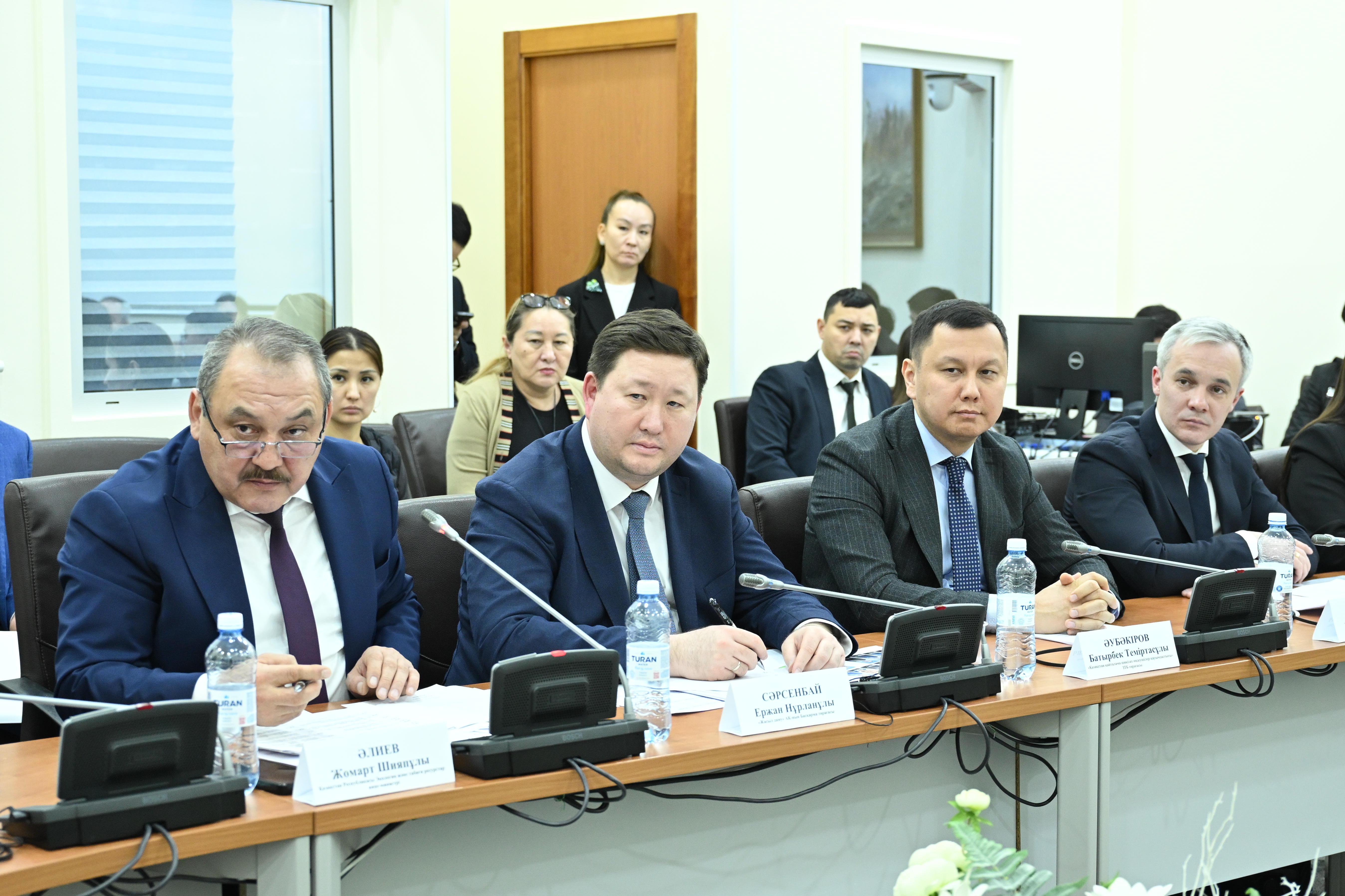
The Ministry of Ecology and Natural Resources has developed a concept for managing all types of waste. In his report, Vice Minister Zhomart Aliyev highlighted key measures included in the document.
“About 30% of waste is not reflected in official reporting and remains outside the control system. Only 10% of enterprises submit reports electronically. There are significant discrepancies between the State Waste Cadastre and the Geological Committee’s data on technogenic mineral formations. Therefore, the concept provides for a full inventory of all types of waste, updating the national cadastre, mandatory registration of all waste generators in the information system, and digitalization of the sector with elements of artificial intelligence,” Aliyev said.
According to him, three waste-to-energy plants are planned for construction in Astana, Almaty and Shymkent to process non-recyclable fractions. Investment agreements worth 293 billion tenge have already been signed with Chinese investors. Construction will take two years, and the combined capacity of the three facilities will reach 3,600 tons of waste per day.
Chairman of the Board of Zhasyl Damu JSC Erzhan Sarsenbay reported that the total volume of utilization payments, considering actual receipts since 2022 and the 2025 plan, amounted to about 1.5 trillion tenge. Around 175 billion tenge has been transferred to the state budget. He stressed that these results became possible after the transfer of responsibilities from the former private operator to the state-owned company.
According to Zhasyl Damu, 17 abandoned hazardous waste facilities have been transferred into republican ownership. Among them:
6 facilities have been eliminated (in Kostanay, Karaganda, and Mangystau regions);
2 have been processed (mercury-containing waste from TEMK in Karaganda region, and oil sludge in Zhanaozen, Mangystau region);
2 were transferred to local authorities (radioactive waste in Koshkar-Ata, Mangystau region, and chemical waste from the Alga chemical plant in Aktobe region);
6 are pending removal (in Kostanay, Akmola, and Pavlodar regions);
1 requires examination (waste at the sulfuric acid plant in Mangystau region).
Work to eliminate historically accumulated waste continues and requires significant resources.
Chairman of the Association of Secondary Raw Material Recyclers of Kazakhstan Batyrbek Aubakirov proposed introducing a “green procurement” mechanism. He suggested setting a 5–10% quota for purchasing goods produced with Kazakhstani recycled materials. This, he said, would enable the production of goods from local waste while solving the raw material shortage problem. The association also supports increasing the number of waste collection points and introducing tax incentives for collectors, including self-employed individuals.
Suggestions were also voiced by Rinat Ishbulatov, head of “Rudny-Abat-2006” LLP, Kundyz Bikina, Executive Director of the Association of Tire Manufacturers, Importers and Recyclers, and solid waste management expert Aslan Kulmagambetov.
In developing MSW infrastructure, 22 projects worth 89.4 billion tenge have been financed. Eighty garbage trucks were purchased, three sorting lines were launched, and 14 recycling projects with an annual capacity of 396,000 tons were initiated. The recycling rate is planned to increase from 25% to 40%.
The EcoQolday program demonstrates steady growth: 43.96 thousand tons of waste were recycled, 1,725 participants registered, 776 applications were submitted through the mobile app, and total payments exceeded 700 million tenge.
Within the Taza Kazakhstan initiative, nine national parks were equipped with separate collection containers, modular stations, reverse vending machines, and biodegradable bags; educational videos were prepared. In schools in Astana and Zhezkazgan, 3,285 containers were installed and lessons on environmental culture were conducted.
The presented data confirm that the state system for managing utilization payments has become a driver for domestic mechanical engineering, modernization of waste management infrastructure, and job creation.
JSC Zhasyl Damu will continue to work on building a modern, transparent and efficient waste management system, strengthening environmental culture, and developing digital tools for the sector. The company reaffirms its readiness to continue cooperation with Parliament and the Government to implement the approved Waste Management Concept and achieve national environmental goals.
 EcoQolday
 Check payment
 Login to the system

 share
share