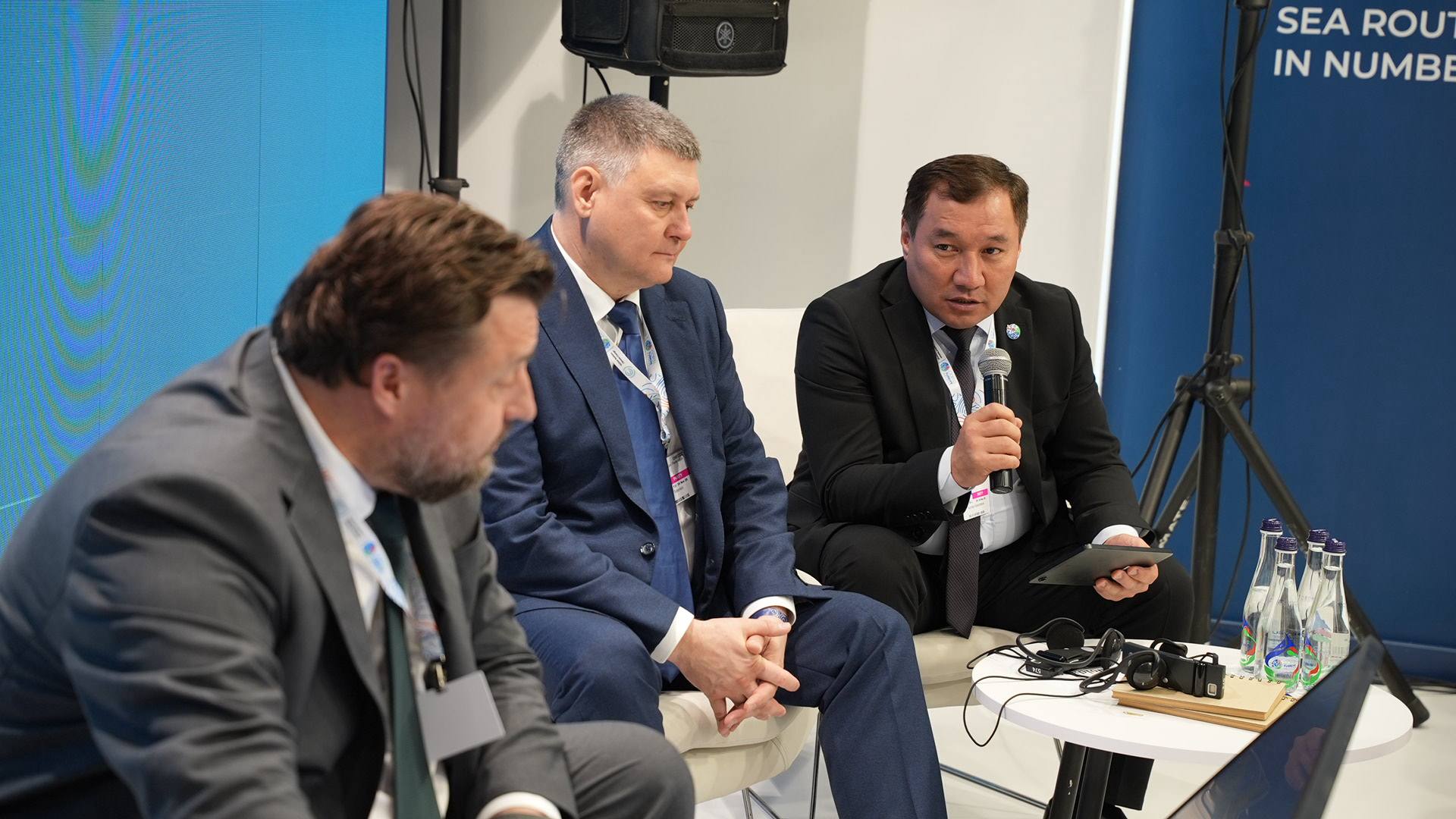
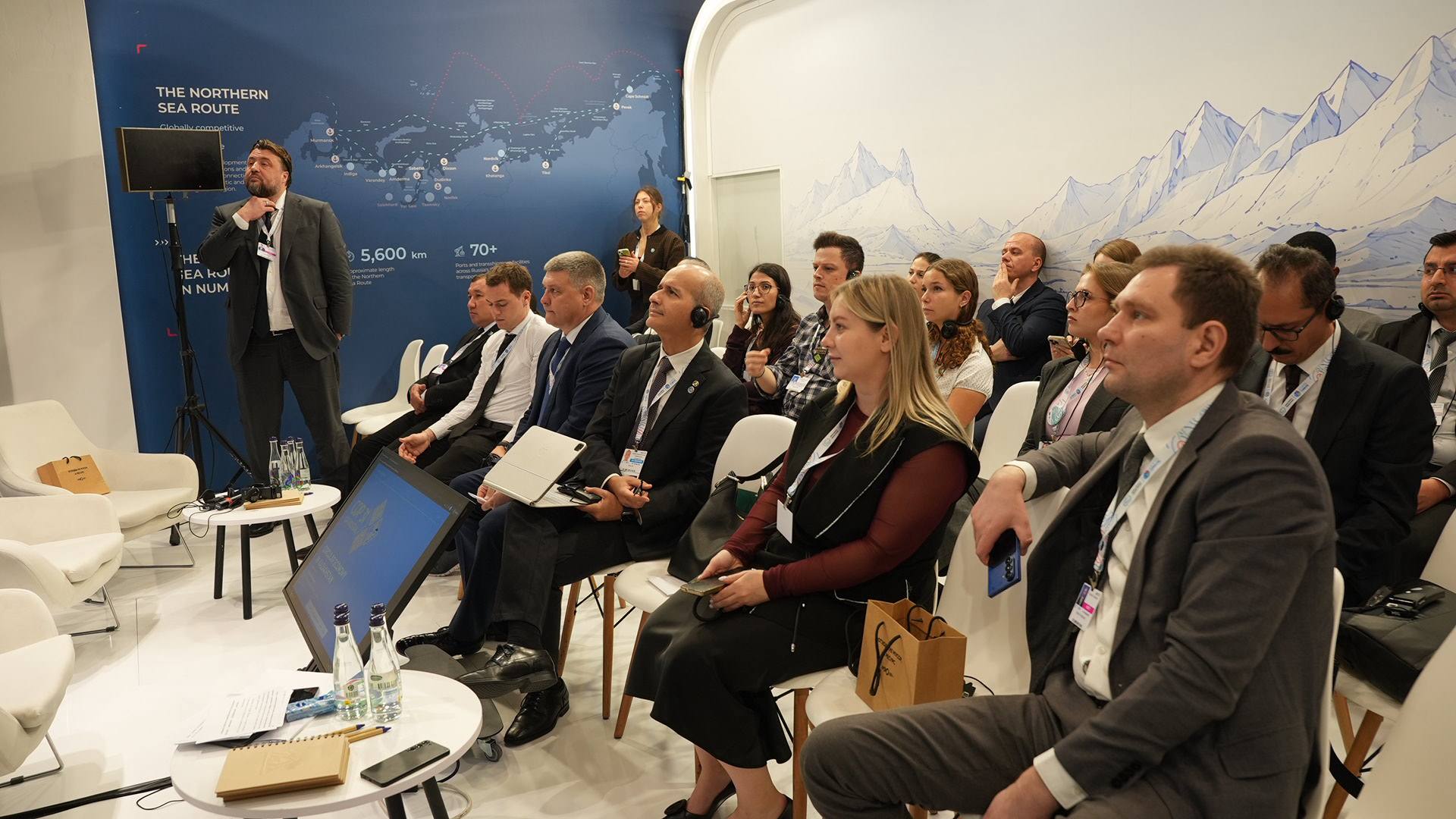
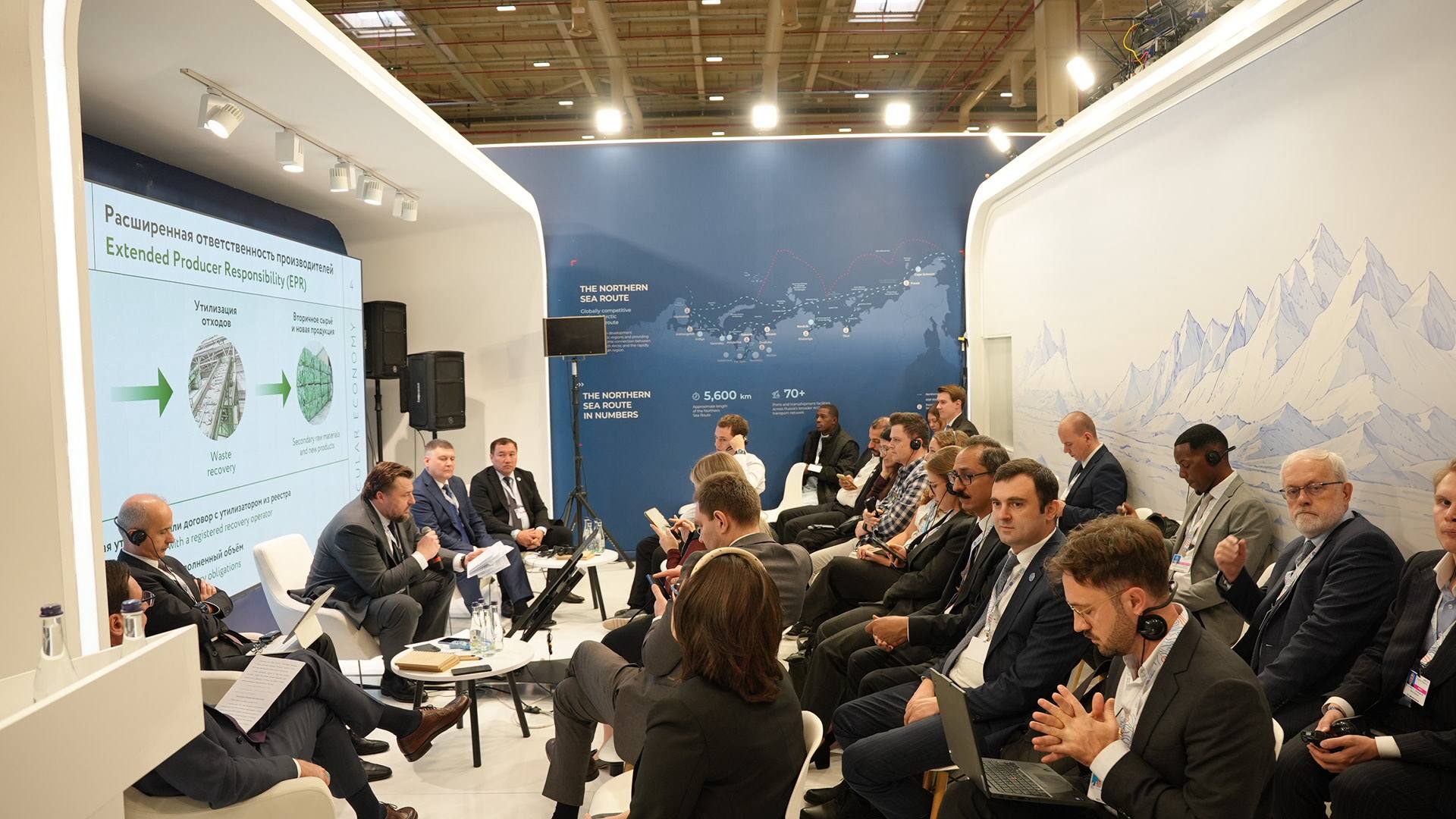
An international session titled “Circular Economy: International Cooperation and New Opportunities” was held at the Russian Federation’s National Pavilion during the COP31 Climate Change Conference in Antalya, Türkiye. Nurzhan Kabdoldanov, Deputy Chairman of the Management Board of Zhasyl Damu JSC, participated in the event, presenting Kazakhstan’s experience in developing its recycling industry and outlining prospects for international partnerships.
The discussion brought together Dmitry Tetenkin, Deputy Minister of Natural Resources and Environment of the Russian Federation; Pavel Kosov, Director General of the Russian Environmental Operator (REO); and Erfan Ali, UN-Habitat Director for Eastern Europe and Central Asia.
The session focused on the efficient use of resources, the introduction of advanced waste recycling technologies, investment attraction, and the development of joint environmental projects. Particular attention was paid to the role of international cooperation in the transition towards sustainable production and consumption models.
During his address, Nurzhan Kabdoldanov highlighted Kazakhstan’s efforts to develop a circular economy. He emphasized that this approach goes beyond municipal waste recycling and includes reintegrating industrial resources into the economic cycle, establishing new production facilities, and reducing dependence on primary raw materials.
Kazakhstan has allocated more than USD 400 million to develop waste collection, sorting, and recycling infrastructure. At the same time, efforts are underway to assess the resource potential of the country's regions and identify promising areas for investment. Particular importance is attached to accumulated industrial waste, which, subject to compliance with environmental requirements, could serve as a source of secondary raw materials for new industries.
The representative of Zhasyl Damu JSC also emphasized opportunities for international partnerships, including technology exchange, investment attraction, and the implementation of joint projects.
“Our common goal is to make economic growth and environmental responsibility integral parts of a single development model. By combining our efforts and international expertise, we can move beyond individual initiatives towards systemic solutions,” Nurzhan Kabdoldanov emphasized.
Participants underscored the importance of cooperation among governments, businesses, financial institutions, and international organizations in implementing effective circular economy solutions and achieving climate goals.

 EcoQolday
 Check payment
 Login to the system

 share